
Hired and Non-Owned Auto for Restaurants

See How We're Different
or call us: 1-800-969-9740
A single car accident involving one of your
delivery drivers can expose your restaurant to a lawsuit that dwarfs your annual revenue. Most
restaurant owners carry
general liability and
property coverage, but they overlook a critical gap: what happens when employees drive vehicles your business doesn't own. Whether your staff runs catering orders across town, picks up supplies in their personal cars, or rents a van for a weekend event, your business could be on the hook for damages. Hired and non-owned auto insurance for restaurant delivery, catering, rentals, and employee vehicles fills that gap, and it's one of the most affordable protections you can add to your policy.
Commercial auto premiums have
risen 5.8% in Q1 2026 alone, marking the 59th consecutive quarterly increase. That trend makes it tempting to skip coverage you think you don't need. But the cost of going without HNOA protection is far higher than the premium. A delivery driver T-bones a minivan at an intersection, and suddenly your restaurant faces a seven-figure claim with no coverage to respond. We've seen it happen to small operations that assumed their employee's
personal auto policy would handle everything. It won't, and we'll explain exactly why.
Understanding Hired and Non-Owned Auto (HNOA) Insurance
HNOA insurance is a liability endorsement that protects your business when employees drive vehicles your company doesn't own or title. It splits into two parts: "hired auto" covers vehicles you rent or lease on a short-term basis, while "non-owned auto" covers employees using their personal cars for business tasks. The policy pays for third-party bodily injury and property damage claims that arise from accidents during business use.
This coverage doesn't replace your employees' personal auto policies. It sits on top of them, providing an extra layer of liability protection for the business entity itself. Think of it as your restaurant's safety net for the driving it doesn't directly control.
Why Personal Auto Policies Fail to Cover Business Use
Your employee's personal auto insurance was written for personal use: commuting, errands, weekend trips. Most personal policies include exclusions or limitations for commercial activity. If your driver is delivering 40 orders a week, their insurer may deny a claim entirely, arguing the vehicle was being used for business purposes outside the policy terms.
Even if the personal policy does pay out, it protects the employee, not your restaurant. The injured party's attorney will name your business in the lawsuit because the driver was acting within the scope of employment. Without HNOA, your restaurant has no policy to respond to that claim. The legal concept of vicarious liability means you're responsible for your employees' actions while they're working for you, regardless of whose car they're driving.
The Difference Between Hired and Non-Owned Coverage
Hired auto coverage kicks in when your business rents, leases, or borrows a vehicle. You rent a refrigerated van for a weekend catering gig, and the driver rear-ends someone on the highway: hired auto responds. Non-owned coverage applies when an employee uses their own car for a business errand, like picking up produce from a supplier or delivering a lunch order.
Both coverages address liability only. They don't pay for damage to the rented vehicle itself (you'd need a damage waiver or physical damage endorsement for that) and they don't cover repairs to your employee's personal car. The distinction matters when you're structuring your policy, because each scenario carries different risk profiles and different premium calculations.
By: John R. Thomas
Commercial Lines Director and Managing Partner at Loft & Co Insurance Services
HNOA in Action: Delivery, Catering, and Rentals
Restaurants face a wider range of driving exposures than most small businesses. Your staff might make dozens of delivery runs daily, transport hot food to off-site events, or rent vehicles for supply pickups. Each of these scenarios creates liability that your standard general liability or business owner's policy won't cover.
Managing Risks for Restaurant Delivery Drivers
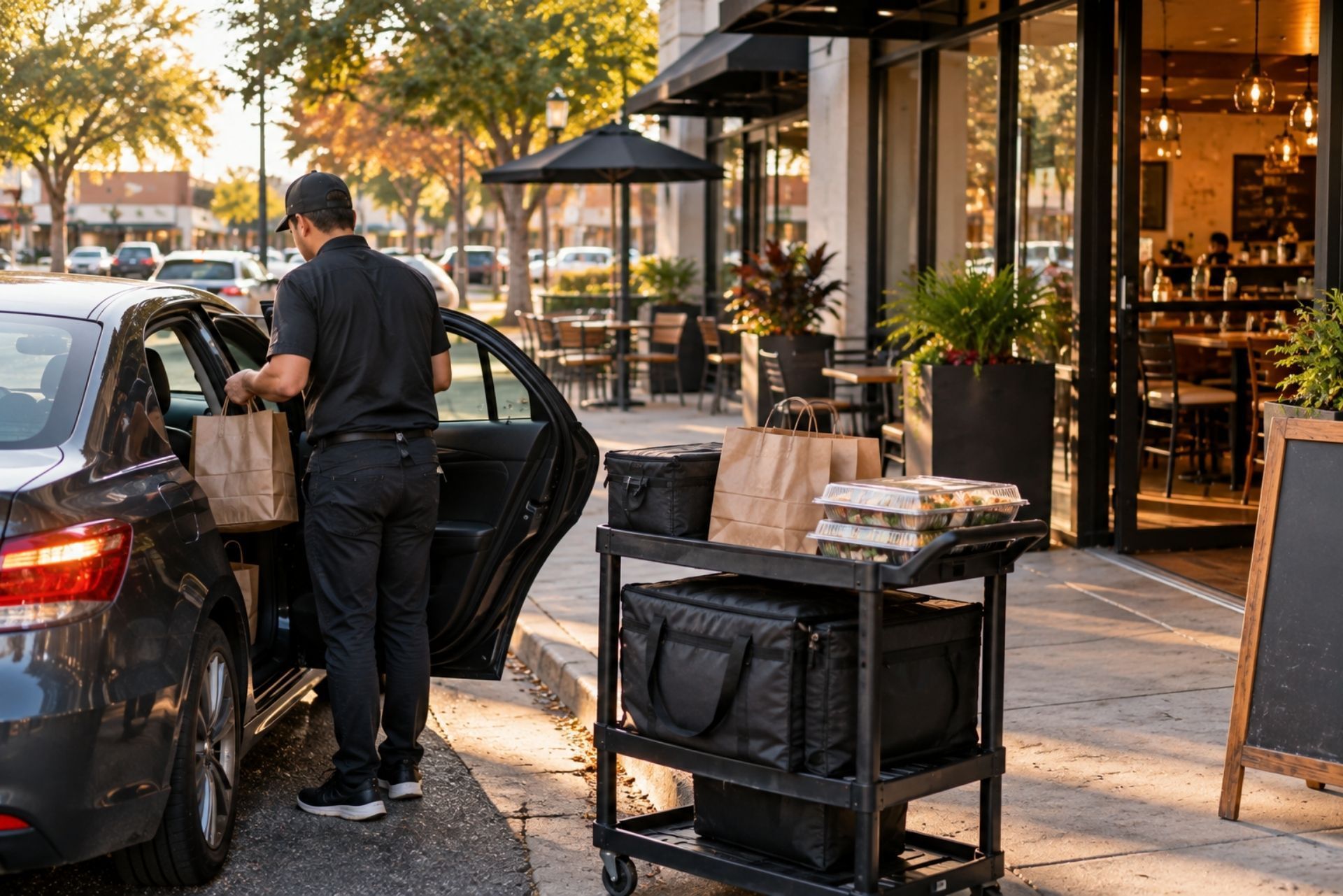
Delivery is where most restaurant driving claims originate. Drivers are rushing to meet time windows, navigating unfamiliar neighborhoods, and handling food simultaneously. A recent $2.5 million settlement for a delivery driver injured in an Illinois crash illustrates how quickly costs escalate in these cases.
If you employ your own delivery drivers rather than relying on third-party apps, your exposure is direct. Require proof of personal auto insurance with minimum limits of 100/300/100 before allowing any employee to deliver. Even then, your HNOA policy is what protects the restaurant when claims exceed your driver's personal limits or their insurer denies coverage.
Catering Logistics and Off-Site Event Liability
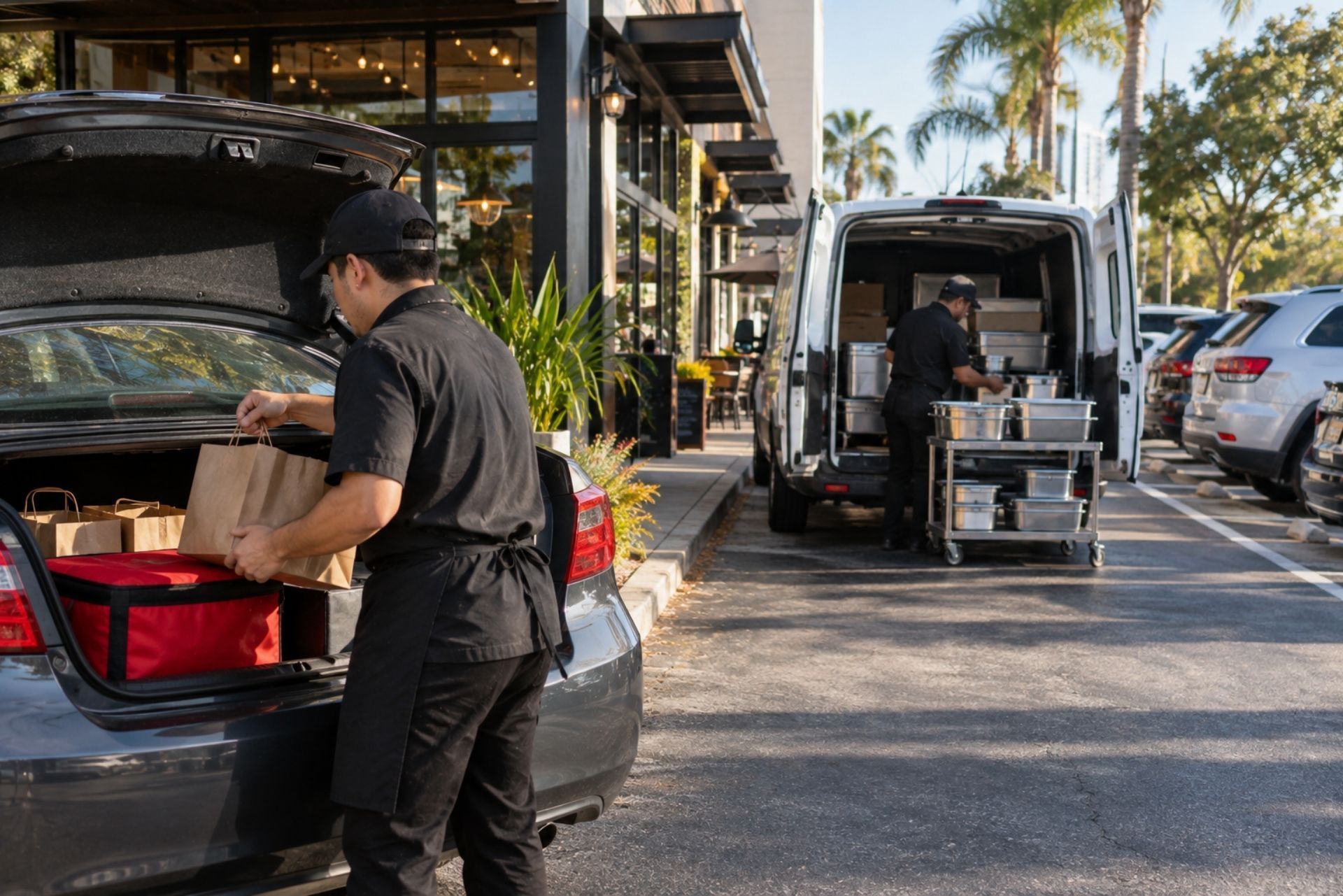
Catering jobs multiply your driving risk. Employees transport heavy equipment, chafing dishes, and large quantities of food, often in personal vehicles not designed for the load. A shift in cargo during a turn can distract a driver or cause loss of vehicle control.
Off-site events also introduce unfamiliar routes and parking situations. Your catering team might be driving to a venue they've never visited, in a vehicle packed to capacity. Catering insurance quotes often reveal that businesses underestimate their auto exposure because they focus on food safety and event liability instead. HNOA fills that blind spot by covering the drive to and from the event, not just what happens once you arrive.
Renting Vehicles for Corporate Travel or Events
Some restaurants rent vans or trucks for large catering jobs, supply runs, or even staff transportation to off-site locations. The rental company's insurance is minimal and expensive per day. Your hired auto coverage provides liability protection for these rented vehicles at a fraction of the cost.
One thing to keep in mind: hired auto covers your liability to third parties, not the physical damage to the rental vehicle. If you want to skip the rental counter's collision damage waiver, you'll need a hired auto physical damage endorsement added to your policy. That's a separate line item, but it can save you significant money over time if you rent vehicles frequently.
Comparing Coverage: Personal vs. Commercial vs. HNOA
Understanding where each policy type applies helps you avoid paying for coverage you don't need while ensuring you're not leaving gaps.
Comparison Table: Liability Scenarios and Coverage Gaps
| Scenario | Personal Auto | Commercial Auto | HNOA |
|---|---|---|---|
| Employee delivers food in their own car | Covers the employee (may deny for business use) | Only if vehicle is listed on policy | Covers the business entity |
| Manager rents a van for catering event | No coverage | Only if rental is scheduled on policy | Covers liability for rented vehicles |
| Employee runs to the bank for the business | May cover if insurer allows business errands | Typically not cost-effective for occasional use | Covers the business for incidental trips |
| Driver causes injury during delivery | Pays employee's liability up to their limits | Full coverage if vehicle is on the policy | Fills gap above personal limits for the business |
| Damage to the employee's own vehicle | Covered under their collision policy | N/A | Not covered: HNOA is liability only |
The key distinction: commercial auto is for vehicles your business owns or leases long-term. HNOA is for everything else. If you own a delivery fleet, you need commercial auto. If your drivers use their own cars, you need non-owned auto coverage. Many restaurants need both.
Common Questions About Employee Vehicle Use
Does my personal insurance cover me if I'm delivering food?
It depends on your policy and how often you deliver. Most personal auto policies exclude regular commercial delivery. If you deliver food as your primary job duty, your personal insurer will likely deny a claim. Some insurers offer a rideshare or delivery endorsement, but you need to confirm this with your agent before assuming you're covered.
What happens if an employee causes a crash in their own car?
The employee's personal auto policy responds first. If their limits are insufficient or their insurer denies the claim due to business use, the injured party will pursue your restaurant directly. Without HNOA, your business has no insurance to defend against that lawsuit. You're paying legal fees and any judgment out of pocket.
Does HNOA pay for repairs to my employee's vehicle?
No. HNOA is strictly a liability coverage. It pays for damage your employee causes to other people and their property. Your employee's own vehicle damage falls under their personal collision coverage. This is a common misconception, and it's worth clarifying with employees so they understand what protections they carry.
Is HNOA required by law for small businesses?
No state mandates HNOA specifically. But if your employees drive for business purposes, you're exposed to vicarious liability claims regardless of whether you carry coverage. Some contracts, especially catering agreements with corporate clients or venues, require proof of hired and non-owned auto coverage before you can work the event.
How much does a typical HNOA policy cost?
HNOA is usually added as an endorsement to your general liability or business owner's policy. For a small restaurant, premiums typically run between $200 and $600 per year. That's remarkably low given the protection it provides. The exact cost depends on your number of employees, how often they drive for business, and your claims history. With car insurance premiums rising across 32 states in 2026, locking in HNOA coverage now makes financial sense.
Implementing Safety Protocols and Best Practices
Carrying HNOA doesn't mean you should ignore risk management. Your premium and your exposure both decrease when you actively manage who drives and how they drive.
Vetting Driver MVRs and Insurance Proof
Pull motor vehicle records (MVRs) for every employee who drives on company business. An MVR reveals DUIs, suspended licenses, at-fault accidents, and excessive violations. Any of these should disqualify someone from driving for your restaurant. We recommend running MVRs annually, not just at hire.
Require employees to provide proof of personal auto insurance with minimum limits you set, typically at least state minimums, though 100/300/100 is a better threshold. Keep copies on file and verify them every six months. Policies lapse, and an employee driving without valid personal coverage shifts the entire liability burden onto your HNOA policy.
Create a written driving policy that covers distracted driving, speed limits, vehicle maintenance requirements, and what to do after an accident. Have every driver sign it. This documentation protects you in court by showing you took reasonable steps to prevent incidents. The casualty insurance market in 2026 rewards businesses that demonstrate proactive risk management with better rates and broader coverage terms.
What This Means for Your Business
Your restaurant's liability doesn't stop at your front door. Every time an employee turns a key in the ignition for a business purpose, your company is exposed. Hired and non-owned auto coverage for delivery, catering, vehicle rentals, and employee cars is one of the cheapest endorsements you can add, yet it protects against some of the largest claims your business will ever face.
Start by auditing how often your employees drive for work. Count delivery runs, supply pickups, bank deposits, catering trips, and any vehicle rentals. Then talk to your insurance agent about adding HNOA to your existing policy. Ask specifically about hired auto physical damage if you rent vehicles regularly.
The restaurants that survive liability claims aren't the ones that got lucky. They're the ones that identified their exposures, bought the right coverage, and built safety protocols before the accident happened. A $300 annual endorsement looks like the best money you've ever spent when you're staring down a six-figure lawsuit. Get your HNOA coverage in place this week.
About The Author:
John R. Thomas
As Commercial Lines Director and Managing Partner at Loft & Co Insurance Services, I specialize in crafting strategic insurance solutions for businesses—especially contractors, real estate owners, logistics firms, and industry-specific operations. With years of experience in risk management and policy design, I’m committed to delivering clarity, value, and protection that helps you focus on growth.
Contact Us
Risk Management from Real Experts With You in Charge
Professional Policies Designed For Your Business.
Enjoy tailored insurance and risk management solutions customized to your industry and business size.

Colorado Commercial Insurance Blog
Contact Us
Phone
Location
Denver
5990 Greenwood Plaza Blvd, Ste 270
Greenwood Village, CO 80111
Des Moines
130 E 3rd St. Ste 201
Des Moines, IA 50309