

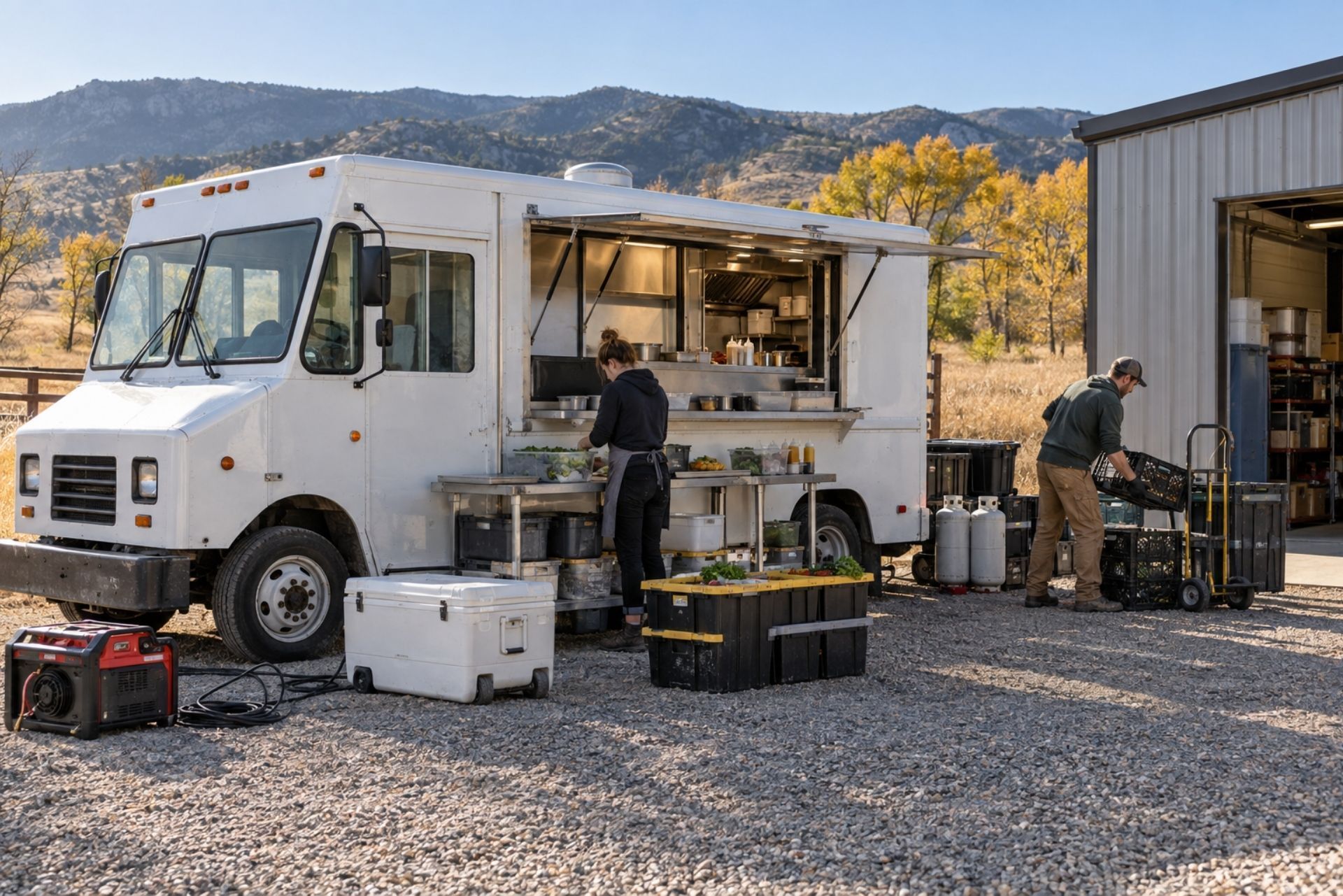
Running a food truck in Colorado means juggling propane tanks, tight parking spots, festival crowds, and a menu that changes faster than the weather on Pikes Peak. A single grease fire, a fender bender on I-25, or a slip-and-fall at a weekend market can shut you down for weeks if you don't have the right protection in place. The insurance needs of a mobile kitchen are fundamentally different from those of a
brick-and-mortar restaurant or a
standard delivery vehicle. You're combining a
commercial vehicle, a cooking operation, and a
temporary retail location into one rolling business, and that combination creates overlapping risks that standard policies aren't designed to handle. Colorado's mix of state regulations, municipal permit requirements, and event-specific insurance demands makes the picture even more complex. This guide breaks down the coverage types you actually need, the Colorado-specific rules you'll face, and the real costs involved so you can make
informed decisions and keep your truck on the road.
Why Colorado Food Trucks Need Specialized Coverage
A permit lets you park and cook legally. Insurance pays for the losses that happen despite your best efforts. That distinction matters more than most new owners realize, because a city license won't cover a $40,000 liability claim from a customer who gets sick after eating your tacos. Colorado's food truck scene has grown steadily, and with that growth comes tighter regulation and higher expectations from event organizers, commissary kitchens, and landlords.
The Risk Profile of Mobile Food Businesses
Your truck faces hazards that don't exist in a traditional restaurant. Driving a heavy vehicle with a commercial kitchen bolted to the back creates auto liability exposure every time you pull onto the highway. Propane lines, deep fryers, and exhaust hoods present fire risks that are amplified by the confined space of a mobile unit. A proactive fire safety inspection for a Colorado mobile kitchen typically runs $250 to $300, but a single code violation can cost $1,000 to $3,000 per day in lost revenue. Equipment vibration during transit can loosen gas fittings or damage refrigeration compressors, leading to breakdowns that wouldn't happen in a fixed location. Then there's the weather: Colorado hail can dent your truck, high winds can topple a service window, and icy roads create accident risk from October through April.
Colorado State Requirements vs. City-Specific Permits
Colorado operates under a patchwork of state and local rules. Effective January 1, 2026, House Bill 25-1295 introduced a
reciprocal licensing system that streamlines health and fire permits across jurisdictions, meaning a health permit obtained in one county can now be recognized in another. That's a real time-saver, but the law does not replace individual insurance requirements. Each city can still demand its own proof of coverage. In Denver, for example, food trucks must obtain a
Flammable Operational Permit from the Denver Fire Department at roughly $200 per year. Boulder, Fort Collins, and Colorado Springs each have their own permitting layers. The takeaway: don't assume one policy or one permit covers you everywhere you plan to serve.
By: John R. Thomas
Commercial Lines Director and Managing Partner at Loft & Co Insurance Services
Core Insurance Policies for Your Mobile Kitchen
Think of your insurance program as a stack of policies, each covering a distinct category of risk. Skipping one layer leaves a gap that could cost you everything. Here's what the stack looks like for a Colorado food truck.
General Liability and Product Liability
General liability (GL) is the foundation. It covers third-party bodily injury and property damage, like a customer tripping over your power cord or your awning scratching a neighboring vendor's vehicle. Product liability, which is often included in or endorsed onto a GL policy, covers claims arising from the food you serve. If a batch of undercooked chicken sends someone to the ER, product liability responds. Most event organizers and commissary kitchens require a minimum of $1 million per occurrence in GL coverage before they'll let you set up. Some large festivals push that to $2 million aggregate.
Commercial Auto and Hired/Non-Owned Coverage
Your personal auto policy almost certainly excludes vehicles used for business purposes, and it won't cover the custom kitchen equipment inside. Commercial auto insurance covers collision, comprehensive damage, and liability while your truck is on the road. If you occasionally rent a vehicle or an employee uses their personal car to pick up supplies, hired and non-owned auto coverage fills that gap. Colorado law requires minimum auto liability limits of $25,000 for bodily injury per person, $50,000 per accident, and $15,000 for property damage, but those state minimums are dangerously low for a commercial vehicle. Most insurers and industry advisors recommend at least $500,000 in combined single-limit coverage.
Inland Marine: Protecting Your Equipment on the Move
Standard property insurance covers items at a fixed location. Your generator, griddle, refrigeration unit, and POS system ride around in a truck, which means they need inland marine coverage. This policy protects equipment in transit and at temporary locations, covering theft, accidental damage, and sometimes even mysterious disappearance. If someone breaks into your truck overnight and steals $8,000 worth of kitchen gear, inland marine is the policy that pays. It's one of the most overlooked coverages in the food truck world, and one of the most valuable.
Comparing Essential Coverage Tiers
Not every truck needs every bell and whistle, but cutting corners on the wrong coverage can be catastrophic. The table below shows what a basic liability-only approach looks like compared to a more complete protection plan.
Table: Basic Liability vs. Comprehensive Protection
| Coverage Area | Basic Liability Only | Comprehensive Protection |
|---|---|---|
| General Liability | $1M per occurrence | $1M/$2M aggregate |
| Product Liability | Included in GL | Included in GL |
| Commercial Auto | State minimum limits | $500K+ combined single limit |
| Inland Marine | Not included | Equipment covered in transit |
| Equipment Breakdown | Not included | Repair/replacement + lost income |
| Workers' Comp | Only if required by law | Included for all staff |
| Business Interruption | Not included | Covers lost revenue during downtime |
| Approximate Annual Cost | Lower premiums, higher out-of-pocket risk | Higher premiums, far less financial exposure |
A
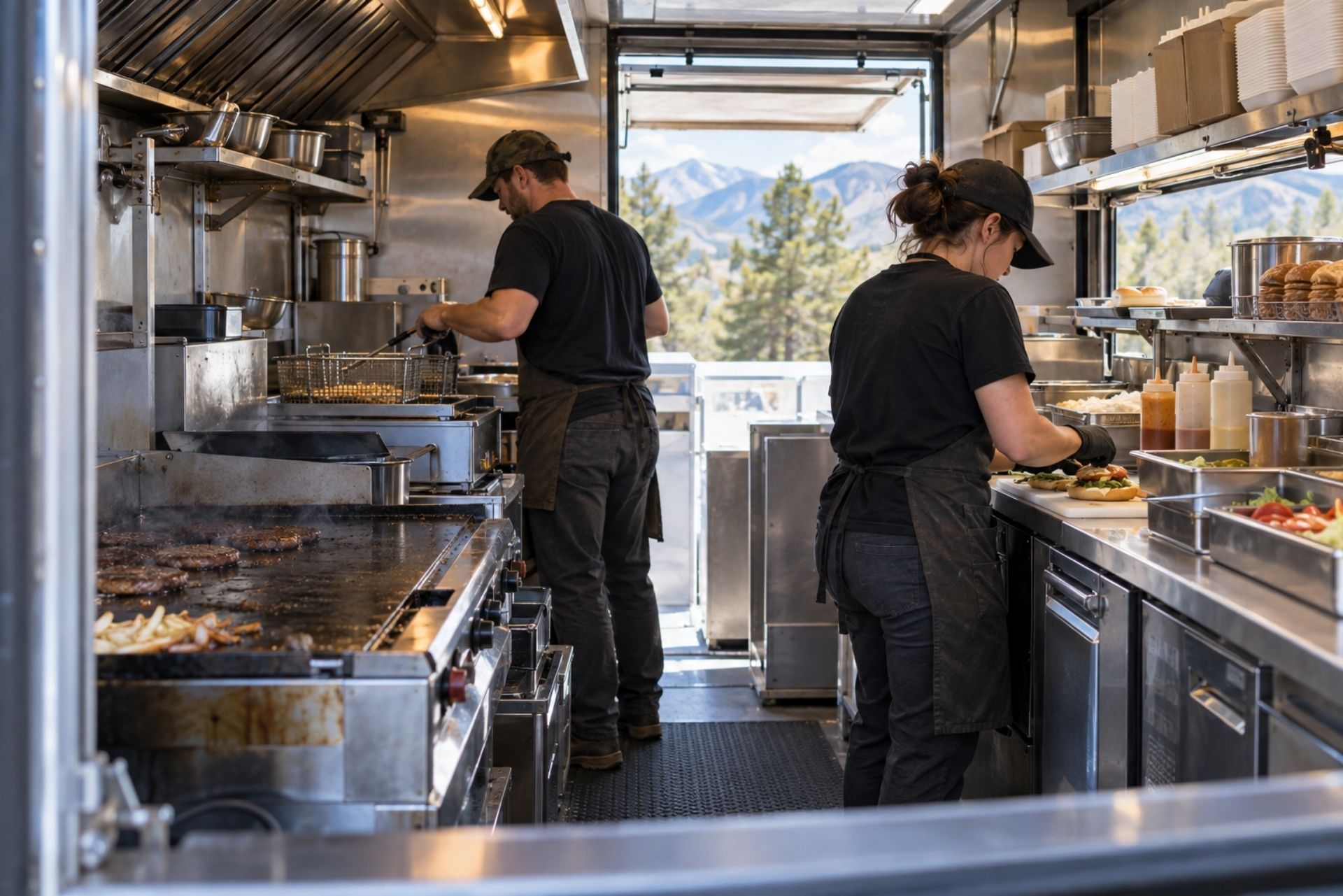
typical owner-operated food truck in Colorado can expect to spend between $2,500 and $8,000 annually on a combined insurance program covering auto, general liability, equipment, and workers' comp. Where you land in that range depends on your truck's value, your menu (deep-frying raises rates), your driving record, and how many events you work.
Colorado-Specific Mandates: Workers' Comp and Health Permits
Colorado has some firm rules that apply to every food truck with employees. Ignoring them doesn't just create coverage gaps; it creates legal liability for you personally.
Understanding the Colorado Workers' Compensation Act
The Colorado Department of Labor and Employment requires workers' compensation insurance for any business with one or more employees, and that includes part-time staff and family members working the window. There's no exemption for small crews. If your line cook burns their hand on a flattop or slips on a wet floor, workers' comp covers their medical bills and a portion of lost wages. Without it, you're personally liable for those costs, and you'll face fines from the state. Colorado's Division of Workers' Compensation enforces this aggressively. Pinnacol Assurance is the state-designated carrier of last resort, but you should compare quotes from private carriers annually. Your experience modification rate (EMR) will affect your premiums over time, so documenting safety training and maintaining a clean claims history pays off.
Insurance Certificates for Denver and Boulder Events
Event organizers across Colorado's Front Range routinely require a Certificate of Insurance (COI) naming them as an additional insured before you can set up at their venue. Denver's food truck rallies, Boulder's farmers' markets, and festival circuits from Telluride to Fort Collins all have this expectation. Your insurance agent should be able to issue a COI within 24 to 48 hours, but don't wait until the day before an event to request one. Some policies charge a small fee per certificate, while others include unlimited COIs. Ask about this when you're shopping for coverage, because a truck that works 30 events a year will need 30 certificates, and those fees can add up.
Common Questions About Food Truck Insurance
How much does food truck insurance cost in Colorado? Costs vary by equipment value, menu type, and how many locations you serve. Most small, owner-operated trucks pay between $2,500 and $8,000 annually for a full insurance package covering auto, liability, equipment, and workers' comp.
Can I just use my personal car insurance for my truck? No. Personal auto policies exclude vehicles used for business purposes and won't cover specialized cooking equipment, commercial liability, or product liability claims. You need a commercial auto policy designed for your operation.
What happens if my generator breaks down? Equipment breakdown coverage can be added to your policy to pay for repairs and lost income due to mechanical failure. Without it, you're paying out of pocket for both the repair and the revenue you lose while your truck sits idle.
Do I need insurance if I only operate at private parties?
Yes. Property owners will require a Certificate of Insurance before they'll let you set up on their land. Even a backyard catering gig exposes you to liability if a guest gets injured or sick. Operating without coverage at a private event is one of the fastest ways to face a lawsuit with no financial backstop.
What This Means for Your Business
Food truck insurance in Colorado covers a lot of ground: commercial auto, kitchen fire risks, event certificates, equipment protection, and liability for the food you serve. No single policy handles all of it, which is why building a layered program matters. Start with general liability and commercial auto as your foundation, then add inland marine for your equipment and workers' comp if you have any employees at all.
Work with an agent who understands mobile food operations, not just commercial auto or restaurant insurance in isolation. Ask them about COI turnaround times, equipment breakdown endorsements, and whether your policy accounts for Colorado's hail and winter driving risks. Get quotes from at least three carriers, and revisit your coverage every year as your truck's value, menu, and event schedule change.
The cost of proper coverage is a fraction of what a single uninsured claim can do to your business. Protect the truck, protect your crew, and keep serving.
About The Author:
John R. Thomas
As Commercial Lines Director and Managing Partner at Loft & Co Insurance Services, I specialize in crafting strategic insurance solutions for businesses—especially contractors, real estate owners, logistics firms, and industry-specific operations. With years of experience in risk management and policy design, I’m committed to delivering clarity, value, and protection that helps you focus on growth.
Contact Us
Risk Management from Real Experts With You in Charge
Professional Policies Designed For Your Business.
Enjoy tailored insurance and risk management solutions customized to your industry and business size.

Colorado Commercial Insurance Blog
Contact Us
Phone
Location
Denver
5990 Greenwood Plaza Blvd, Ste 270
Greenwood Village, CO 80111
Des Moines
130 E 3rd St. Ste 201
Des Moines, IA 50309