

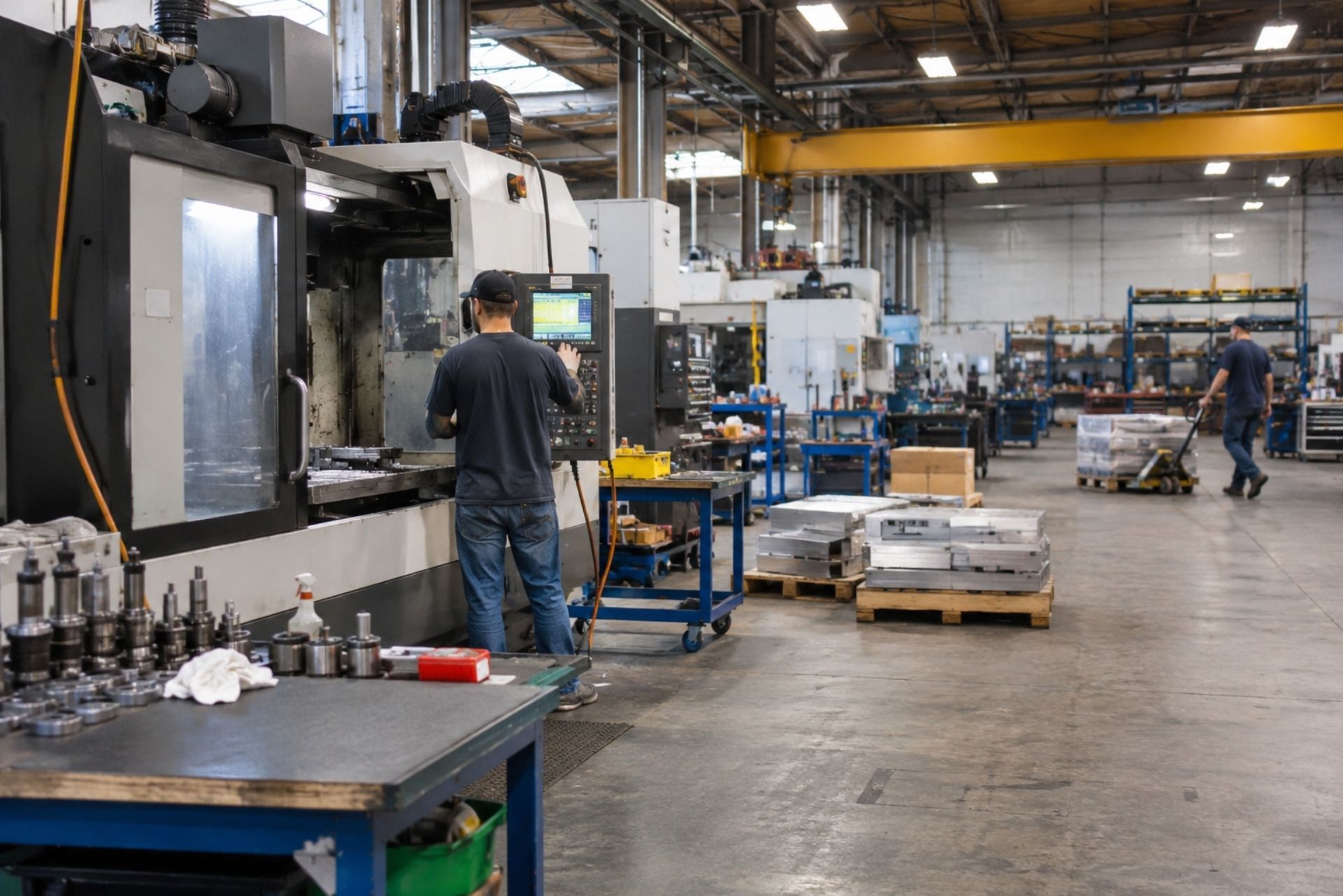
A single cracked hydraulic hose on a press brake can stop a Denver fabrication line for three days. Add a missed delivery to an aerospace customer and a hail-damaged roof leaking onto a CNC cabinet, and a manageable week becomes a six-figure problem.
Colorado manufacturers face a specific mix of risks. Front Range hail, mountain freight bottlenecks, a crowded state workers' comp market, and customers who demand certificates of insurance before they'll sign a purchase order all shape how your coverage should be built. Getting your Colorado manufacturers insurance right, from general liability and product liability through property, equipment, business income, workers' compensation and costs, is the difference between filing a claim and closing your doors.
Most owners I talk to have coverage. Far fewer have the right coverage. The gaps usually show up in the same places: recall expenses nobody budgeted for, equipment that isn't scheduled correctly, and business income limits based on last decade's revenue. One uncovered product claim can wipe out years of margin for a small
machine shop.
Protecting Colorado's Manufacturing Sector
Colorado's manufacturing base is broader than most people assume. You'll find craft food and beverage producers in Fort Collins, aerospace component shops around Colorado Springs, outdoor gear makers in Boulder, and metal fabricators scattered from Pueblo to Greeley. Each of these operations carries a different risk profile, and a policy written for one rarely fits another.
The common thread is exposure that follows your product out the door. A retailer's risk mostly ends at the register. Yours can surface years later, in another state, when a part you machined fails inside someone else's assembly.
State-level factors add another layer. Hail is the dominant property threat along the Front Range, and the Colorado Division of Insurance has called it the number one cost driver in the property market. Mountain and I-70 freight disruptions can strand raw materials. Colorado also requires workers' comp for nearly every employer, so payroll and job classification directly shape your annual spend.
Regulatory exposure is shifting too. Colorado's Producer Responsibility Program for packaging recycling places fees on producers, and in October 2026 an industry trade group filed a federal lawsuit challenging those fees as unconstitutional. Insurance won't pay regulatory fees, but this kind of compliance pressure affects your cash flow and should factor into how much financial cushion you build around deductibles and retentions.
Here's what that means for you: your insurance program needs to be built around what you make, where you make it, and who buys it. Off-the-shelf business owner policies often exclude manufacturing operations above a certain size or hazard level.
By: John R. Thomas
Commercial Lines Director and Managing Partner at Loft & Co Insurance Services
Core Liability Coverage for Manufacturers
Liability coverage is usually the first thing your customers ask about, and it's the line most likely to be underbuilt. Large OEMs and distributors often require specific limits, additional insured endorsements, and waivers of subrogation before they'll onboard you as a supplier.
General Liability vs. Product Liability
General liability (CGL) covers bodily injury and property damage arising from your premises and operations. Think of a delivery driver slipping on coolant in your loading dock, or your installer scratching a customer's floor. It also includes Coverage B for personal and advertising injury, which matters if your marketing ever names a competitor.
Product liability is technically part of most CGL forms under the "products-completed operations hazard," but it carries its own aggregate limit. That's where many manufacturers get caught. A shop with a $2 million general aggregate may only have a $2 million products aggregate, and one bad production run can exhaust it.
| Feature | General Liability | Product Liability |
|---|---|---|
| What triggers it | Accidents on your premises or during operations | Injury or damage caused by your product after sale |
| Typical claim | Visitor injury at your facility | Defective part causes equipment failure |
| When claims arise | Usually right away | Months or years after delivery |
| Limit structure | General aggregate | Separate products-completed ops aggregate |
| Key gap | Contractual liability limits | Recall costs usually excluded |
Umbrella coverage sits on top of both. Read it carefully. In September 2026 the Colorado Supreme Court held that umbrella insurers don't have to "drop down" to cover claims when a primary insurer becomes insolvent, unless the policy specifically says so. You can review that and other 2026 decisions in the Colorado Supreme Court case archive. The practical lesson: your primary carrier's financial strength matters as much as your umbrella limit.
Navigating Product Recalls and Safety Claims
Standard CGL policies exclude the cost of recalling your own product. That exclusion, often called the "sistership" exclusion, surprises owners every year. If a supplier's bad resin forces you to pull 40,000 units, your CGL won't pay for notification, shipping, destruction, or replacement.
Product recall insurance fills that gap. It typically covers:
- Customer notification costs, including mailers and call centers
- Transportation and disposal of recalled goods
- Replacement product or refunds
- Lost gross profit from the recall period
- Crisis consultant fees for PR and regulatory response
Food and beverage producers face the highest recall frequency, but component makers aren't safe. If your bracket ends up in a recalled consumer product, the brand owner will come looking for reimbursement under your supply agreement. Keep lot-level traceability records. Carriers price recall coverage partly on how fast you can isolate a defect.
Safeguarding Property and Specialized Equipment
Your building, inventory, raw materials, and tooling all fall under commercial property coverage. For manufacturers, the details inside that policy matter more than the headline limit.
Start with valuation. Replacement cost pays to rebuild or replace with new materials of like kind. Actual cash value subtracts depreciation, which can leave you tens of thousands short on an older facility. Most lenders require replacement cost, but some owners switch to ACV on outbuildings to save premium and forget about it.
Hail deserves special attention in Colorado. Many carriers now apply percentage deductibles for wind and hail, often calculated on the building's insured value rather than a flat dollar amount. Run the math before you renew. On a building insured for $3 million, a 2% wind/hail deductible means you'd absorb $60,000 before coverage applies, which is very different from a $10,000 flat deductible.
The state is trying to address this at the source. In June 2026, Governor Polis signed SB26-155, creating the Strengthen Colorado Homes Enterprise to fund grants for fortifying roofs against hail. Coverage of the program describes it as helping property owners, including businesses, upgrade to more durable roofing materials. Check eligibility for your facility, and tell your underwriter about any impact-rated roof upgrade. It can support better deductible terms.
One thing to keep in mind: roof leaks often do more damage than the hail itself. Water reaching electrical panels, PLC cabinets, or stored finished goods drives claim severity. Confirm your policy covers ensuing water damage and that inventory at customer sites or in transit is included.
Equipment Breakdown and Inland Marine Coverage
Standard property policies cover external causes like fire and hail. They don't cover a motor burning out, a boiler failing, or a power surge frying a CNC controller. That's equipment breakdown coverage, and for a manufacturer it's not optional.
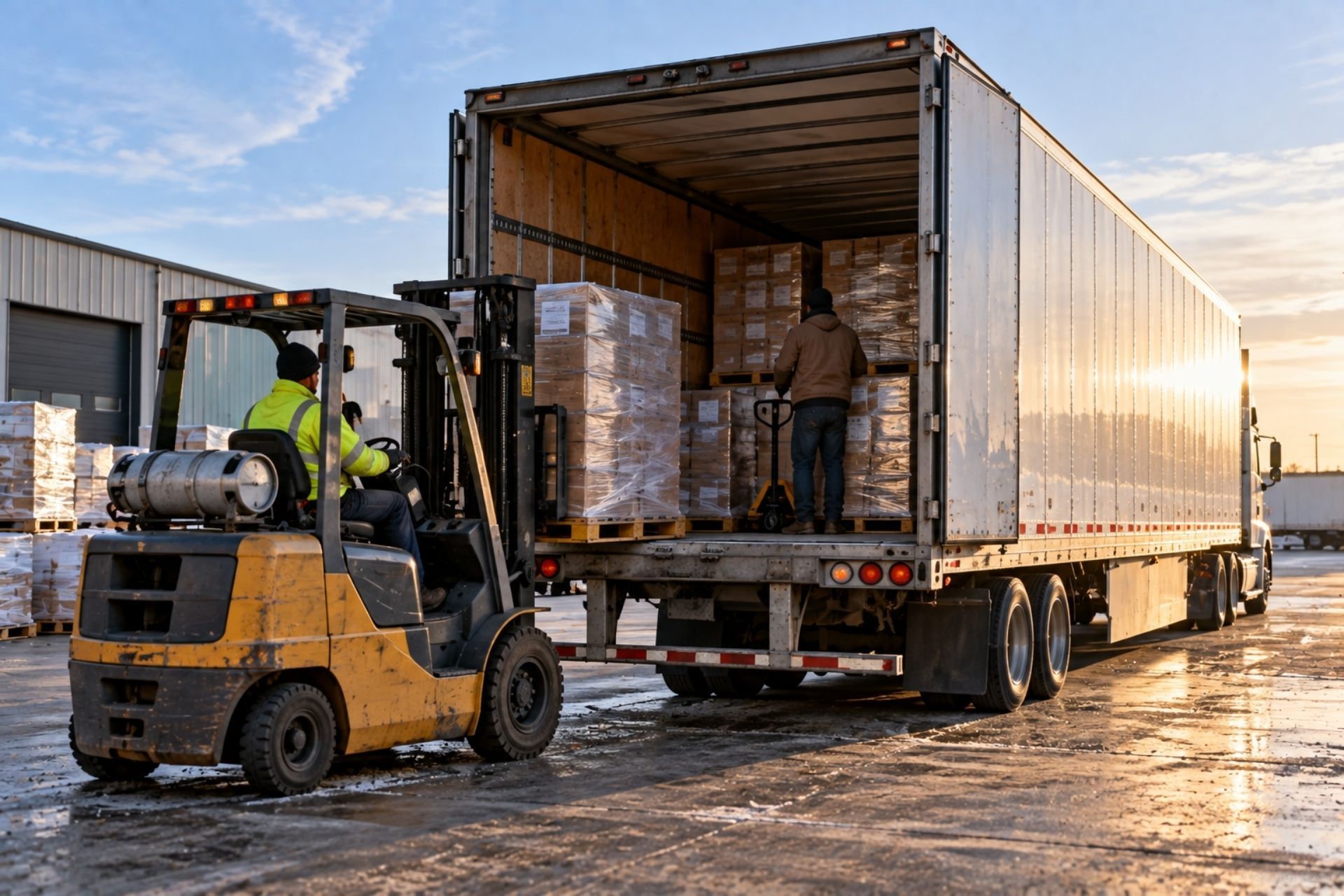
Equipment breakdown typically pays for repair or replacement, expediting costs for rush parts, spoilage of temperature-sensitive materials, and the lost income while the machine is down. Ask whether your policy covers electronic circuitry damage from surges. Colorado's spring thunderstorms produce enough electrical events to make this a real exposure.
Inland marine covers property that moves. That includes:
- Tools and equipment taken to customer sites
- Molds and dies stored at a supplier
- Goods in transit on your own trucks
- Leased or rented equipment you're responsible for
A common mistake: assuming your property policy covers molds sitting at a contract injection molder. It often doesn't, or caps it at a small sublimit.
Business Income and Supply Chain Interruptions
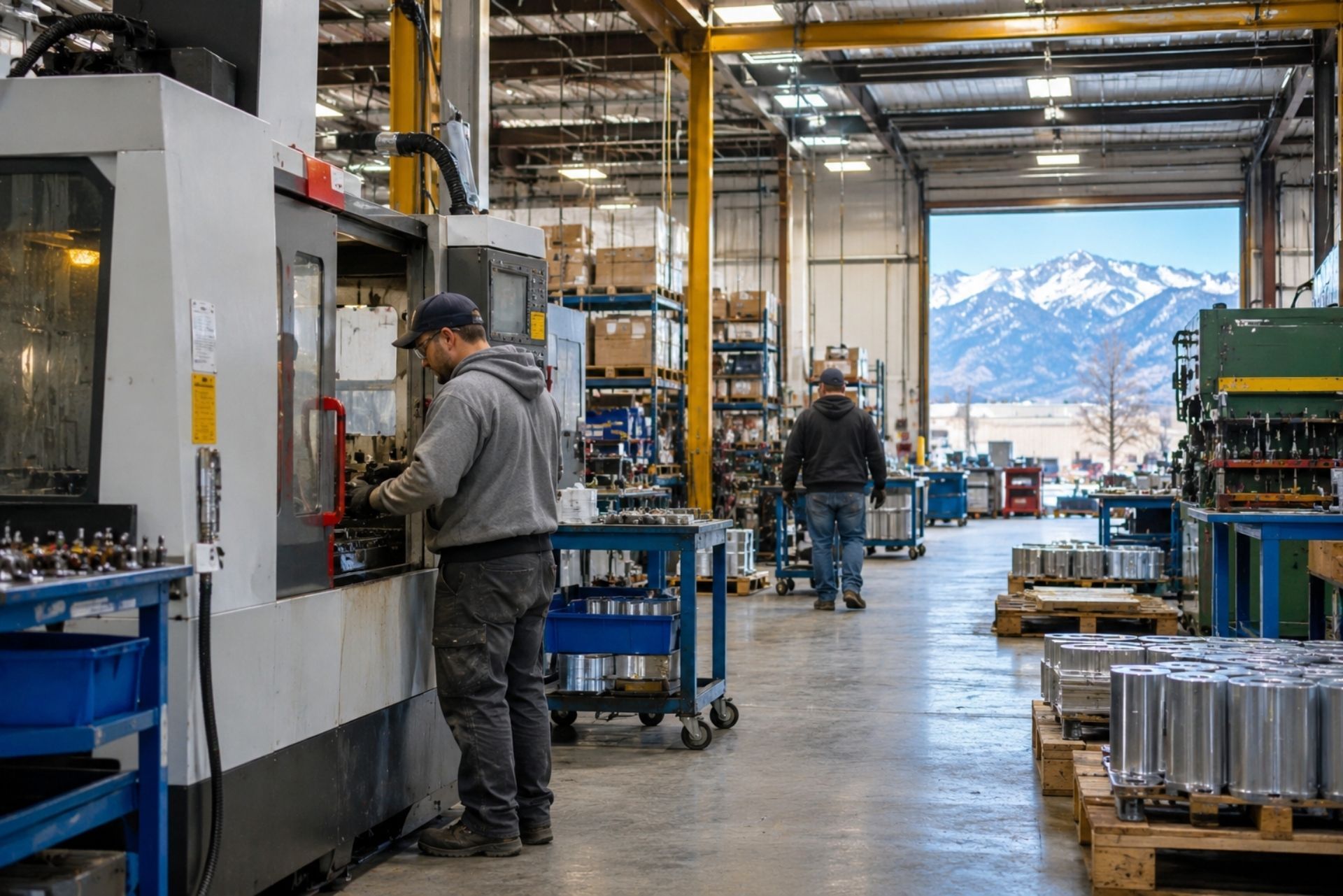
Business income insurance replaces lost net income and pays continuing expenses like payroll, rent, and loan payments after a covered loss shuts you down. Extra expense coverage pays the added costs of staying open, such as renting temporary space or outsourcing production.
The hardest part is setting the right limit. Owners often guess, or carry a number set years ago. A better approach is a business income worksheet that projects 12 months of net income plus continuing expenses, then factors in a realistic restoration period. For a manufacturer with custom equipment and long lead times, rebuilding can take far longer than you'd expect. If a specialized press has a nine-month lead time, a six-month indemnity period leaves you exposed for three months.
Supply chain risk is where coverage gets thin. Business income coverage is becoming more important in 2026 as businesses deal with supply chain fragility and vendor failures. Standard business income only responds to damage at your own location. Contingent business income extends coverage when a key supplier or customer suffers a covered loss.
Here's a realistic scenario. Your sole-source casting supplier in Texas has a fire. Your plant is undamaged, but production stops. Without contingent business income, you have no claim. With it, you can recover lost income, subject to the sublimit and the named or unnamed supplier terms.
Also look at:
- Utility service interruption, for power or gas outages originating offsite
- Civil authority, when officials block access to your facility
- Extended period of indemnity, which covers the ramp-up after you reopen
Customers don't wait forever. Some will switch suppliers during your shutdown and never come back, which is why the extended period matters.
Workers' Compensation Requirements in Colorado
Colorado requires nearly every employer with one or more employees, full-time or part-time, to carry workers' compensation. There's no small-business exemption based on headcount. The Colorado Division of Workers' Compensation enforces the requirement and can issue penalties and order cessation of operations for employers without coverage.
You have three main options. You can buy from a private carrier, purchase through Pinnacol Assurance (Colorado's large domestic workers' comp carrier, originally the state fund), or qualify to self-insure if you're large and well-capitalized. Most small and mid-size manufacturers choose between private carriers and Pinnacol.
Colorado uses NCCI classification codes and experience rating. Your premium is roughly your payroll per $100 in each class code, multiplied by the class rate and your experience modification rate (EMR). An EMR of 1.00 is average. Below that, you pay less. Above it, you pay more.
The math matters. Say your base premium is $80,000. At a 0.85 EMR, you pay $68,000. At a 1.25 EMR, you pay $100,000. That $32,000 spread comes almost entirely from your claims history over the experience period, which is why a few lost-time injuries can raise your costs for three years.
Classification errors are common in manufacturing. Clerical employees sometimes get lumped into shop codes, and that inflates premium. Review your class codes with your broker every year, and keep payroll records clean ahead of your annual premium audit. Colorado's medical benefits and temporary total disability (TTD) payments follow state rules, so your carrier's claims handling and nurse case management affect how much each claim ultimately costs.
Managing Shop Floor Risks and Safety Audits
Manufacturing claims cluster around predictable hazards. Amputations from press brakes and shears without proper guarding. Crush injuries from forklifts and pallet jacks. Lacerations from sheet metal. Repetitive motion injuries from assembly work. Burns from welding and heat-treat operations.
Lockout/tagout failures drive some of the most severe claims. A worker clearing a jam on a high-torque machine without isolating energy can lose a hand in a fraction of a second. These claims carry high medical costs, long TTD periods, and permanent impairment ratings.
Practical steps that carriers notice:
- Document a written lockout/tagout program with machine-specific procedures
- Conduct monthly guarding inspections and keep signed logs
- Run forklift certification and refresher training on a fixed schedule
- Investigate near misses, not just injuries
- Build a formal return-to-work program before you need one
Return-to-work programs cut claim costs by shortening TTD periods. Have modified-duty roles ready: tool crib inventory, safety documentation, quality inspection at a seated station, or training new hires on paperwork. An injured machinist doing inventory counts at full wages often costs you less than the same worker sitting at home on TTD.
Factors Influencing Manufacturing Insurance Costs
There's no honest single price for manufacturing insurance. Two shops in the same zip code can pay very different premiums based on what they make and how they operate. The factors that move your costs most:
- Product type and end use. Parts going into aircraft, medical devices, or children's products carry higher liability rates than shelving brackets.
- Revenue and sales volume. Product liability is often rated on gross sales, so growth raises premium.
- Payroll and class codes. These drive workers' comp directly.
- Loss history. Carriers look at three to five years of claims across every line.
- Building age, construction, and roof condition. Older roofs in hail zones can push carriers to raise deductibles or decline.
- Fire protection. Sprinklers and proximity to a fire station lower property rates.
- Export sales. Products sold into Canada or abroad may need territory extensions.
- Contract requirements. Higher limits demanded by customers raise umbrella costs.
Your deductible choices give you some control. Raising a property deductible can lower premium, but only if you have the cash reserves to absorb a loss. The same goes for workers' comp deductible plans, which suit larger operations with solid safety records.
Broker choice matters more than most owners realize. A generalist agent who mostly writes restaurants won't know the right recall form or how to argue a misclassified NCCI code. Work with an agent who places manufacturing accounts regularly, and have them quote Pinnacol alongside several private carriers every year. Rates and appetite shift, and loyalty rarely gets rewarded at renewal.
Comparing Coverage: Basic vs. Extended Manufacturer Packages
Many carriers sell manufacturer package policies. The base version often looks fine until you compare it line by line against an extended version.
| Coverage Element | Basic Package | Extended Package |
|---|---|---|
| General & product liability | Standard limits | Higher aggregates, broad additional insured |
| Product recall | Excluded | Available by endorsement |
| Equipment breakdown | Sometimes excluded | Included with spoilage and surge |
| Business income | Fixed months | Actual loss sustained, longer indemnity |
| Contingent business income | Not included | Named or unnamed suppliers |
| Inland marine | Low sublimits | Scheduled molds, dies, transit |
| Wind/hail deductible | Percentage-based | Negotiable, may favor upgraded roofs |
| Best fit | Low-hazard, single-site shops | Multi-customer, high-value equipment |
Basic packages can work for small, low-hazard operations. If you have sole-source suppliers, expensive machinery, or demanding OEM contracts, the extended package usually pays for itself the first time something goes wrong.
Common Questions About Colorado Manufacturing Insurance
Do I need workers' comp if I only have one part-time employee? Yes. Colorado requires coverage for employers with one or more employees, including part-time workers. Sole proprietors without employees can usually opt out.
What happens during my annual premium audit? Your carrier reviews actual payroll and sales against the estimates used at policy start. If you grew, you'll owe additional premium, so keep records organized by class code.
How fast do I need to report a workplace injury? Report injuries to your carrier right away, and keep in mind the Colorado Division of Workers' Compensation sets specific deadlines for employer reports on lost-time claims. Late reporting can increase claim costs and create compliance issues.
Are subcontractors covered under my policy? Usually not. Require subcontractors to carry their own workers' comp and liability, collect certificates of insurance, and get added as additional insured. Uninsured subs can end up on your audit and your premium.
Does my general liability cover a product recall? No. Standard CGL excludes recall costs for your own products. You need a separate product recall policy or endorsement.
Can a new roof lower my property insurance? It can. Impact-resistant roofing may help with deductibles or eligibility, and Colorado's new hail-resistant roof grant program aims to make upgrades more affordable.
Making the Right Choice for Your Facility
Strong manufacturing coverage is built around how your operation actually loses money. Product claims that arrive years after a sale. Hail and water damage along the Front Range. A supplier fire that stops your line. A lost-time injury that pushes your EMR above 1.00 for three years.
Start with a full coverage review before your next renewal. Confirm your products aggregate, ask whether recall coverage makes sense, schedule your molds and dies, and rebuild your business income limit from a current worksheet. Check your wind/hail deductible as a dollar amount, not just a percentage.
Then put your program to market. Have a manufacturing-focused broker compare Pinnacol and several private carriers, and bring your safety documentation to the table. Underwriters reward shops that can prove they manage risk.
Insurance won't run your plant. Built correctly, it keeps one bad week from becoming the last chapter of your business.
About The Author:
John R. Thomas
As Commercial Lines Director and Managing Partner at Loft & Co Insurance Services, I specialize in crafting strategic insurance solutions for businesses—especially contractors, real estate owners, logistics firms, and industry-specific operations. With years of experience in risk management and policy design, I’m committed to delivering clarity, value, and protection that helps you focus on growth.
Contact Us
Risk Management from Real Experts With You in Charge
Professional Policies Designed For Your Business.
Enjoy tailored insurance and risk management solutions customized to your industry and business size.

Colorado Commercial Insurance Blog


Contact Us
Phone
Location
Denver
5990 Greenwood Plaza Blvd, Ste 270
Greenwood Village, CO 80111
Des Moines
130 E 3rd St. Ste 201
Des Moines, IA 50309