
Colorado Masonry Contractor Insurance

See How We're Different
or call us: 1-800-969-9740
Picture a Lakewood homeowner calling you two years after you built her stone retaining wall. Spring runoff and expansive Front Range clay have pushed it six inches out of plumb, the fence on top has collapsed, and her attorney says the footing was undersized. You're no longer on that job. Your insurance still has to answer for it, and that's where most masonry contractors find out what their policy really covers.
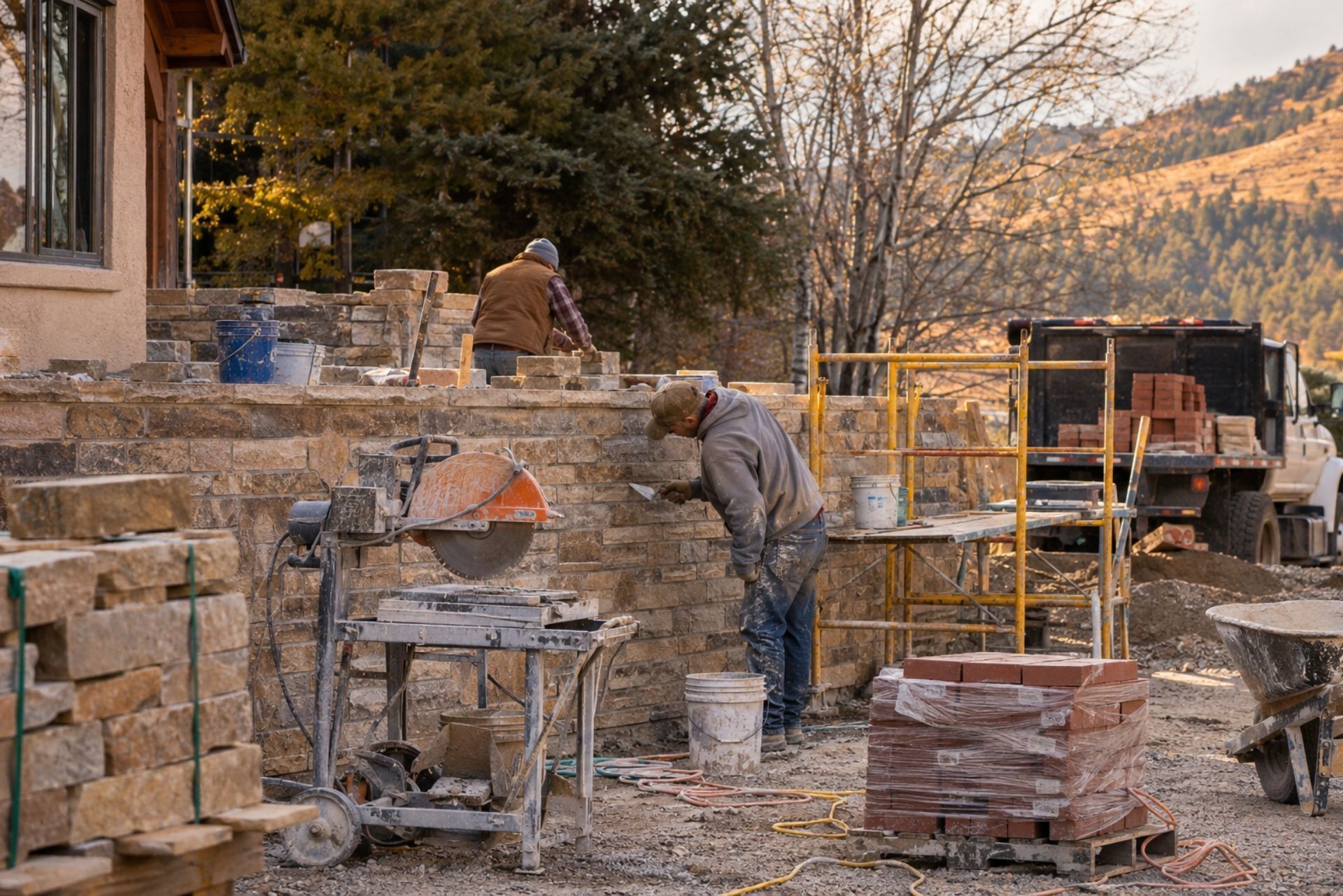
Masonry work carries a mix of risks that generic contractor policies often miss. You're dealing with heavy, permanent structures that sit in place for decades. Your crews lift block and stone all day and work off scaffolds. Your trucks haul pallets that weigh more than some sedans. Colorado's freeze-thaw cycles keep testing every mortar joint you've ever pointed.
This guide covers
masonry contractor insurance in Colorado: what each policy does, where the gaps tend to show up, and what drives your costs. You'll also see how state rules and
local permit offices shape your requirements. One uninsured wall failure or back injury claim can wipe out several years of profit for a
small masonry shop, so getting the structure right matters more than finding the cheapest quote.
Essential Insurance Coverages for Colorado Masonry Businesses
Every masonry operation needs a core set of policies. Which ones you need, and at what limits, depends on your contracts, your crew size, and the jurisdictions where you pull permits.
General Liability and Completed Operations
General liability (GL) pays for third-party bodily injury and property damage caused by your operations. Typical claims include a pallet of brick falling onto a client's car, mortar staining a neighbor's new siding, or a passerby tripping over staged materials. GL also includes Coverage B, which handles personal and advertising injury, though masonry contractors rarely file claims under it.
For masonry, the more important piece is completed operations coverage. It responds to claims that come up after you finish a job, like the retaining wall in the opening example, a chimney crown that cracks and lets water into an attic, or a veneer that pulls away from its ties. Because masonry is meant to last for decades, these claims can arrive years after the work is done.
Check two details on your policy. First, look for a separate products-completed operations aggregate, ideally equal to your general aggregate. Second, read the exclusions for "subsidence" or "earth movement." On Front Range bentonite clay, a subsidence exclusion can void coverage for the exact type of failure you're most likely to face. In mountain towns with rocky substrate, the bigger risk is usually drainage, not soil heave.
Tools, Equipment, and Inland Marine Insurance
Your GL policy won't cover your own gear. Mixers, wet saws, scaffolding, forklifts, and skid steers need inland marine coverage, which is often written as a contractor's equipment floater.
Timing works in your favor right now. The inland marine market is in a buyer-friendly soft cycle even as equipment values surge because of rising replacement costs. In practice, you can probably raise your limits without a large premium increase, and you should. If you bought a telehandler three years ago and listed it at the purchase price, replacing it today will likely cost more than your policy pays.
Insist on replacement cost valuation rather than actual cash value. Also confirm that the policy covers theft from unsecured job sites, which is a real problem on construction sites along I-25.
By: John R. Thomas
Commercial Lines Director and Managing Partner at Loft & Co Insurance Services
Colorado Workers' Compensation and Commercial Auto Requirements
These two policies are where Colorado law and your daily operations meet most directly. Mistakes here cost more than mistakes almost anywhere else.
Mandatory State Rules for Masonry Crews
Colorado requires workers' compensation for nearly every employer with even one employee, part-time workers included. The Colorado Division of Workers' Compensation enforces the requirement, and its penalties for operating without coverage add up quickly. Pinnacol Assurance, the state's quasi-public carrier, writes a large share of construction policies and is a useful benchmark for comparing private quotes.
Masonry rates run high because the injuries are both common and expensive: lumbar strains from lifting 80-pound CMUs, silica exposure from cutting stone, and falls from scaffolds. A herniated disc that requires surgery can easily lead to months of temporary total disability (TTD) payments.
Worker classification is where many masonry firms get into trouble. As of July 1, 2026, the CDLE doubled its wage claim jurisdiction to $13,000 per employee. If you pay helpers as 1099 "subs" while you control their hours and supply their tools, a misclassification finding can expose you to both wage claims and retroactive comp premiums.
Your experience modification rate (EMR) has a direct effect on what you pay. Consider a firm with $80,000 in base premium. At a 1.25 EMR, it pays $100,000. At 0.85, it pays $68,000. That $32,000 difference often comes down to whether you offer modified duty. An injured mason can handle equipment inventory, safety documentation, or material takeoffs, which keeps them working and keeps TTD payments off your loss record.
Insuring Your Trucks and Mixers
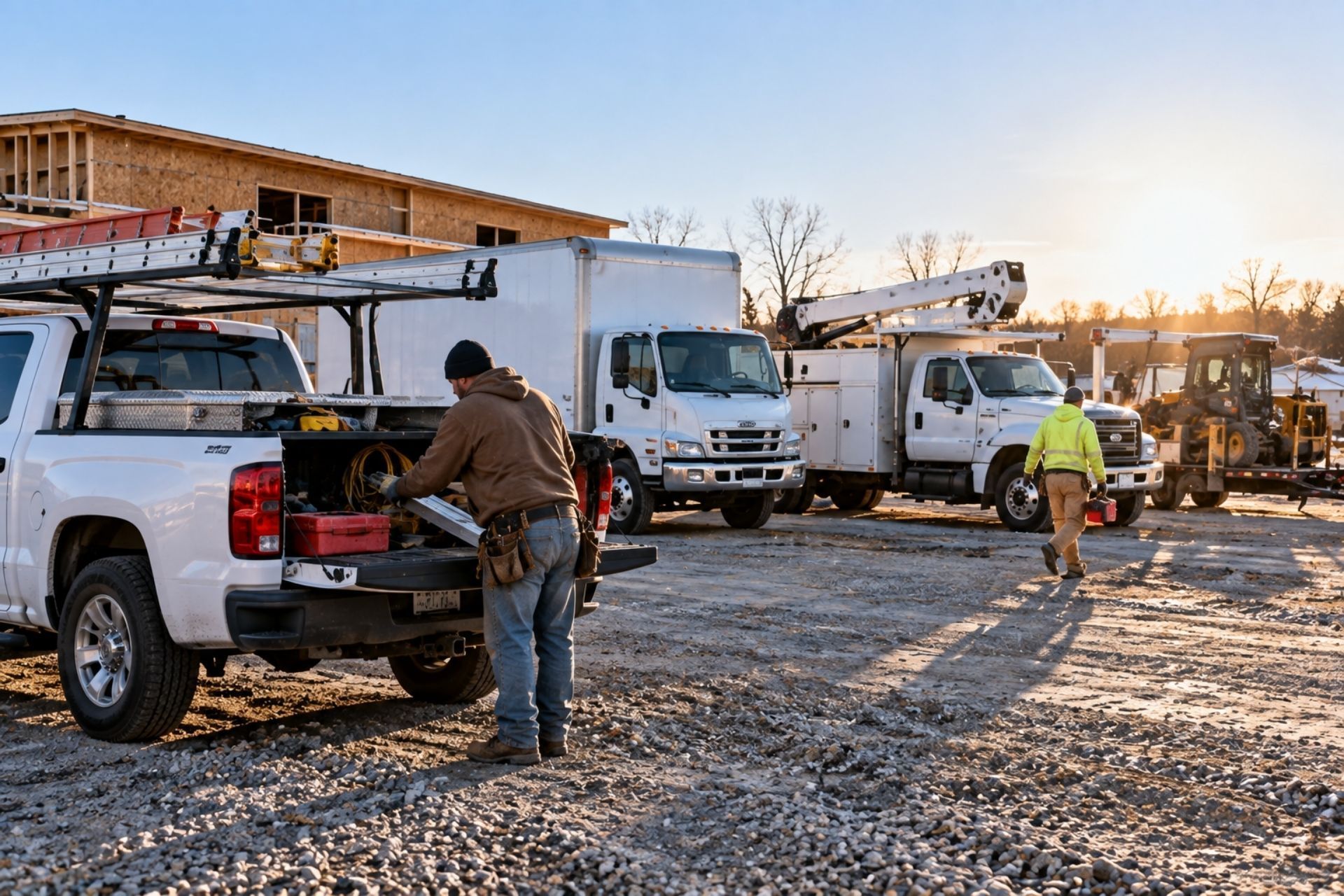
Personal auto policies exclude business use. Commercial auto covers your work vehicles, and it should list every vehicle, trailer, and towable mixer you own. Pay close attention to load weight. Flatbeds carrying stone pallets take longer to stop, and rear-end collisions on mountain grades are a common source of claims.
Add hired and non-owned auto coverage. When a foreman drives his own pickup to the supply yard and causes an accident, your business can be named in the lawsuit, and this coverage is what protects you.
Comparing Coverage Needs: Residential vs. Commercial Masonry
Residential and commercial masonry carry different risks, so the insurance should be built differently.
Residential work tends to involve smaller contracts and closer contact with homeowners. That means more claims from frustrated clients over efflorescence, mismatched brick, or chimney leaks. A $1 million per occurrence / $2 million aggregate GL policy usually works, but completed operations still matters because homeowners keep their properties for a long time.
Commercial work raises the stakes. General contractors usually require:
- Additional insured endorsements (CG 20 10 and CG 20 37) naming the GC and owner
- Primary and non-contributory wording
- Waiver of subrogation on GL, auto, and workers' comp
- Umbrella limits of $2 million to $5 million or more
- Higher completed operations aggregates for multi-story veneer work
A common mistake: a contractor accepts a commercial subcontract without checking that their policy includes blanket additional insured wording. When the GC later requests a certificate, the endorsement either isn't available or comes with a surcharge, and the job is delayed. Before you bid commercial work, ask your agent to compare your policy against a sample contract.
Factors Influencing Insurance Costs in the Centennial State
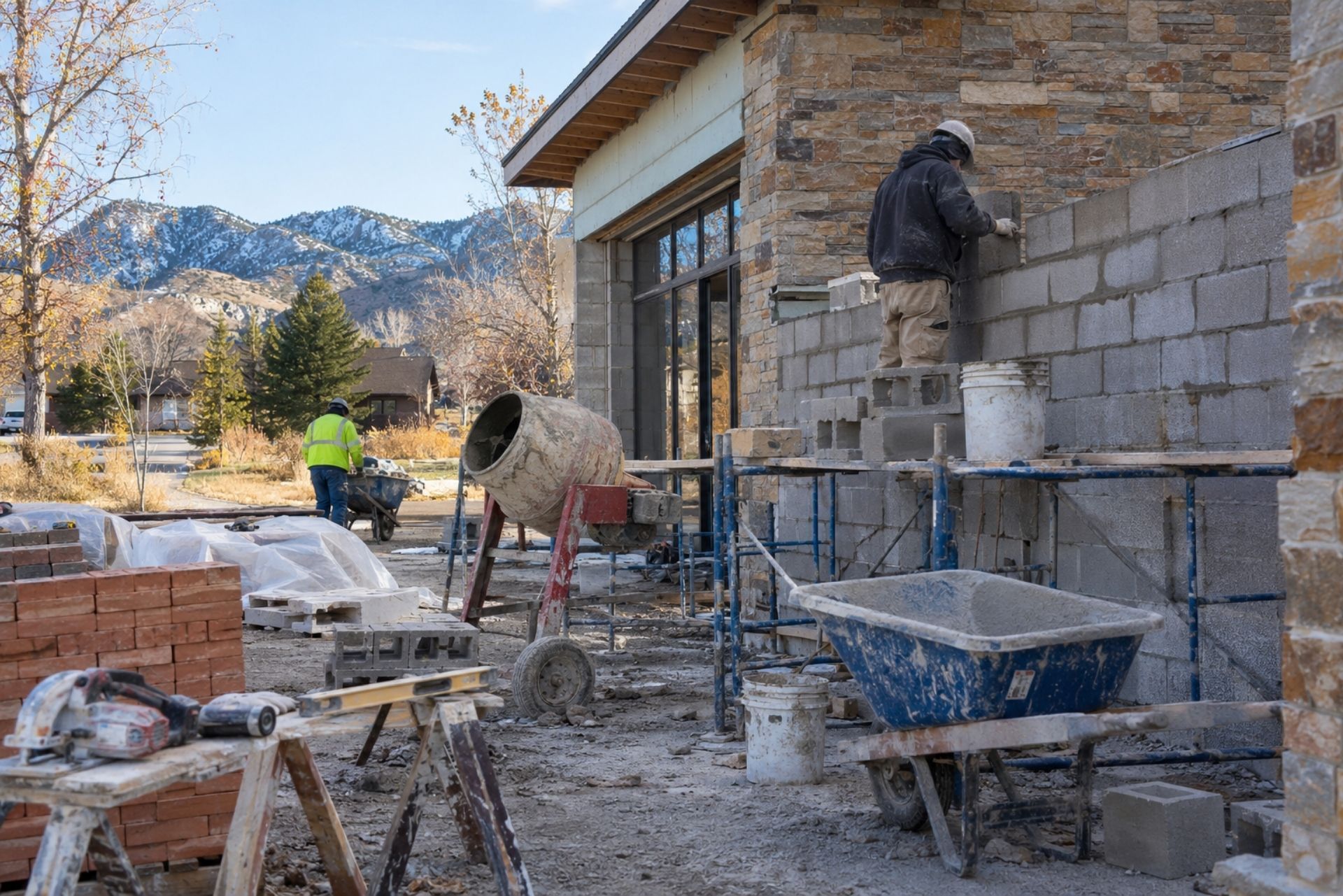
So what will you pay? For GL alone, Colorado masonry contractors usually see premiums between $700 and $3,000 a year, with an average of about $1,000. Colorado contractors in general often pay $900 to $2,200 annually. Your actual cost depends on several factors:
- Payroll and revenue. GL is rated on sales and workers' comp is rated on payroll, so both premiums grow as your business grows.
- Type of work. Chimney and high-rise veneer work is rated higher than flatwork pavers.
- Claims history and EMR. A single large comp claim can affect your rates for three years.
- Location. Because Colorado doesn't license contractors at the state level, local offices such as Denver Community Planning and Development set insurance requirements. Denver, Boulder, and Colorado Springs each have their own expectations.
- Subcontractor practices. Uninsured subs get added to your audit payroll.
That last factor catches people off guard. At your annual audit, the carrier will ask for certificates for every sub you paid. If a $40,000 sub has no valid comp certificate, that $40,000 is added to your payroll and you get a bill for the extra premium.
Coverage Comparison: Basic vs. Comprehensive Protection
| Coverage Area | Basic Package | Comprehensive Package |
|---|---|---|
| General Liability | $1M/$2M, standard form | $1M/$2M with blanket AI, waiver |
| Completed Operations | Shared aggregate | Separate aggregate, no subsidence exclusion |
| Equipment | ACV, scheduled items only | Replacement cost, theft, rented gear |
| Commercial Auto | Owned vehicles only | Adds hired/non-owned, trailers |
| Workers' Comp | State minimum | Plus employer's liability raised to $1M |
| Umbrella | None | $2M to $5M |
| Best For | Small residential crews | Commercial subs, growing firms |
A basic package meets legal requirements. A comprehensive package keeps you eligible for better contracts and handles the claims that would otherwise come out of your own pocket.
Common Questions About Masonry Insurance in Colorado
Do I need workers' comp if I only have one helper? Yes. Colorado requires coverage once you have one employee, including part-timers. Sole owners with no employees can usually opt out.
What happens at my annual premium audit? The carrier compares your actual payroll and revenue against your estimates. Keep subcontractor certificates organized so uninsured subs don't get added to your payroll.
Is Pinnacol always the cheapest option for comp? Not always. Compare Pinnacol's quote against two or three private carriers every year, particularly once your EMR improves.
How long after a job can a completed operations claim come in? Claims can come in years later. Colorado's construction defect statute of repose generally allows claims up to six years after substantial completion, with some extensions.
Does my GL cover damage to the wall I built? Usually not. GL covers resulting damage to other property, like a flooded basement, but generally excludes the cost of fixing your own faulty work.
Should I use a general agent or a specialist? Go with a construction specialist. They know masonry class codes, contract language, and which carriers write subsidence coverage.
The Bottom Line on Protecting Your Masonry Business
Your insurance should be built around the risks you actually face: walls that move on clay soils, crews lifting heavy block, and equipment that costs more to replace every year. Colorado masonry insurance done well combines GL with a strong completed operations aggregate, replacement-cost equipment coverage, commercial auto with hired and non-owned coverage, and a comp program you manage actively.
Your next steps: get your current policies out and check them for subsidence exclusions, equipment valuations, and additional insured wording. Ask your agent to collect quotes from Pinnacol and at least two private carriers. Review how you classify every worker before the CDLE does it for you.
The masonry you build is meant to last fifty years. Your insurance should protect you for at least the years you're legally on the hook for it.
About The Author:
John R. Thomas
As Commercial Lines Director and Managing Partner at Loft & Co Insurance Services, I specialize in crafting strategic insurance solutions for businesses—especially contractors, real estate owners, logistics firms, and industry-specific operations. With years of experience in risk management and policy design, I’m committed to delivering clarity, value, and protection that helps you focus on growth.
Contact Us
Risk Management from Real Experts With You in Charge
Professional Policies Designed For Your Business.
Enjoy tailored insurance and risk management solutions customized to your industry and business size.

Colorado Commercial Insurance Blog



Contact Us
Phone
Location
Denver
5990 Greenwood Plaza Blvd, Ste 270
Greenwood Village, CO 80111
Des Moines
130 E 3rd St. Ste 201
Des Moines, IA 50309