

Picture a crew wrapping up a 9 kW residential install in Aurora on a Friday afternoon. Everything looks clean. Then a June hailstorm rolls through, water finds its way past a poorly flashed lag bolt, and three weeks later the homeowner's ceiling drywall is sagging into their kid's bedroom. The homeowner's carrier pays the claim, then comes after your company to recover every dollar.
That's the reality of solar work in Colorado. Your crews drill hundreds of holes into roofs that face some of the worst hail in the country, they handle live DC circuits, and they work at heights in thin mountain air and gusty Front Range winds. The insurance protecting your business has to account for all of it, not just the generic "contractor" risks a basic policy was built for.
This guide covers
Colorado solar installer insurance from the ground up:
general liability,
roof damage exposure,
completed operations, tools and equipment, workers' compensation, and what drives your costs. One uncovered roof leak claim, filed eighteen months after you cashed the check, can wipe out a year of profit for a small installation company.
The Colorado Solar Market and Necessary Business Protections
Colorado installers operate in a market shaped by weather, regulation, and homeowner anxiety about insurance. Each of those factors affects how claims arise and how carriers view your risk.
Weather comes first. The Front Range sits in one of the most active hail corridors in North America, and state regulators know it. Colorado's Division of Insurance has said plainly that hail is the biggest cost driver of homeowner insurance across the state. That matters to you because every roof penetration you make becomes a potential point of failure the next time a storm hits. When a homeowner files a hail or water claim, adjusters look closely at anything installed on the roof.
Homeowners are also paying more attention to their own policies. Starting October 1, 2026, Colorado House Bill 25-1182 requires insurers to disclose the wildfire risk models they use to set premiums and lets homeowners appeal high-risk scores. Mountain and foothill customers in places like Evergreen or Boulder County will ask harder questions about how your rooftop equipment, conduit runs, and inverters affect their fire exposure and coverage.
Here's the core set of protections most Colorado solar contractors need:
- General liability: third-party bodily injury and property damage, including roof damage during installation
- Completed operations: claims that surface after the job is finished
- Workers' compensation: required by Colorado law once you have employees
- Inland marine: tools, panels, and inverters in transit or on job sites
- Commercial auto: trucks and trailers hauling equipment
- Umbrella/excess liability: extra limits that many commercial and utility-scale contracts demand
By: John R. Thomas
Commercial Lines Director and Managing Partner at Loft & Co Insurance Services
General Liability and Roof Damage Protection
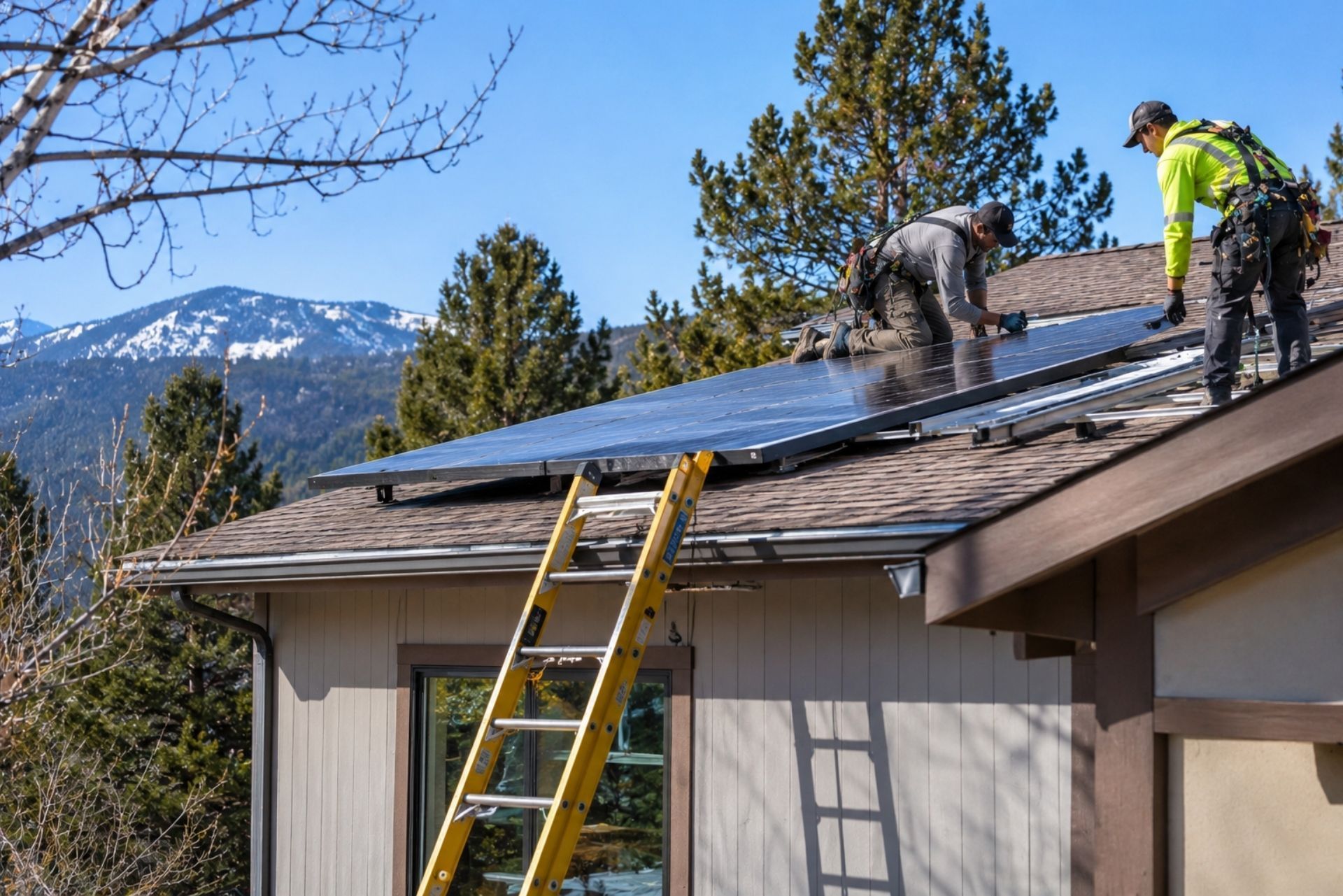
General liability is the policy every homeowner, general contractor, and permitting office will ask about first. It responds when your work causes bodily injury or property damage to someone else. For solar contractors, the property damage side does most of the heavy lifting, and nearly all of it ties back to the roof.
The catch is that many off-the-shelf GL policies weren't written with rooftop solar in mind. Some carriers attach roofing exclusions, height limitations, or "residential work" restrictions that quietly gut coverage for exactly what you do. Read the endorsements page before you read the declarations page.
Managing Risks During Solar Panel Installation
Installation-phase claims tend to be fast and obvious. A crew member cracks concrete tiles on a Highlands Ranch roof while walking to the array location. A dropped rail punches through a skylight. A ladder slides and dents a gutter, or a homeowner's guest trips over an extension cord running across the driveway.
The less obvious risks are the ones I see cause real fights with carriers:
- Open roof exposure: You pull shingles to set flashing, an afternoon thunderstorm hits, and water gets in before you've sealed the penetration. Some policies treat this as faulty workmanship rather than sudden damage.
- Rafter misses: A lag bolt misses the rafter and anchors only into decking, then a spring wind event lifts a section of the array.
- Electrical damage: A wiring error at the main service panel fries the homeowner's appliances or causes an electrical fire.
- Brittle materials: Older asphalt shingles in Colorado's dry, UV-heavy climate crack easily, and tile and slate are worse.
One thing to keep in mind: GL typically won't pay to redo your own defective work. It pays for the resulting damage to the homeowner's property, like the ruined drywall and insulation, but not the cost of re-flashing your mounts. Document roof condition with timestamped photos before you set foot on it. Those photos settle more "you broke it" disputes than any policy language.
Completed Operations: Why Post-Job Coverage Matters
Most solar roof claims don't show up during installation. They show up after the next hard freeze-thaw cycle, the next big snow load, or the next hailstorm. That's completed operations territory, and it's the single most misunderstood piece of coverage in this trade.
Completed operations covers bodily injury or property damage arising from your finished work. If a mount you installed in 2025 starts leaking in 2027, this is the coverage that responds. Many contractors assume it's automatic. It often is included in a standard GL form, but carriers can limit it, reduce the aggregate, or exclude roofing-related completed ops entirely.
Watch for these gaps:
- Separate aggregate limits: Make sure the products-completed operations aggregate is as high as your general aggregate.
- Claims-made vs. occurrence: An occurrence policy covers damage that happens during the policy period, even if it's reported later. Claims-made coverage can leave you exposed if you switch carriers or close the business.
- Tail coverage: If you sell or wind down your company, you need a plan for claims on systems you installed years earlier.
- Contract requirements: Commercial GCs often require completed operations coverage to stay in force for several years after project completion.
Given that residential solar warranties often run for decades, your completed ops exposure lasts far longer than the job did.
Workers' Compensation Laws for Colorado Contractors
Colorado requires employers to carry workers' compensation once they have employees, and that includes part-time helpers. The Colorado Division of Workers' Compensation enforces the requirement, and penalties for going without coverage can grow daily and become personal liability for owners. "We only hire a guy on Saturdays" is not an exemption.
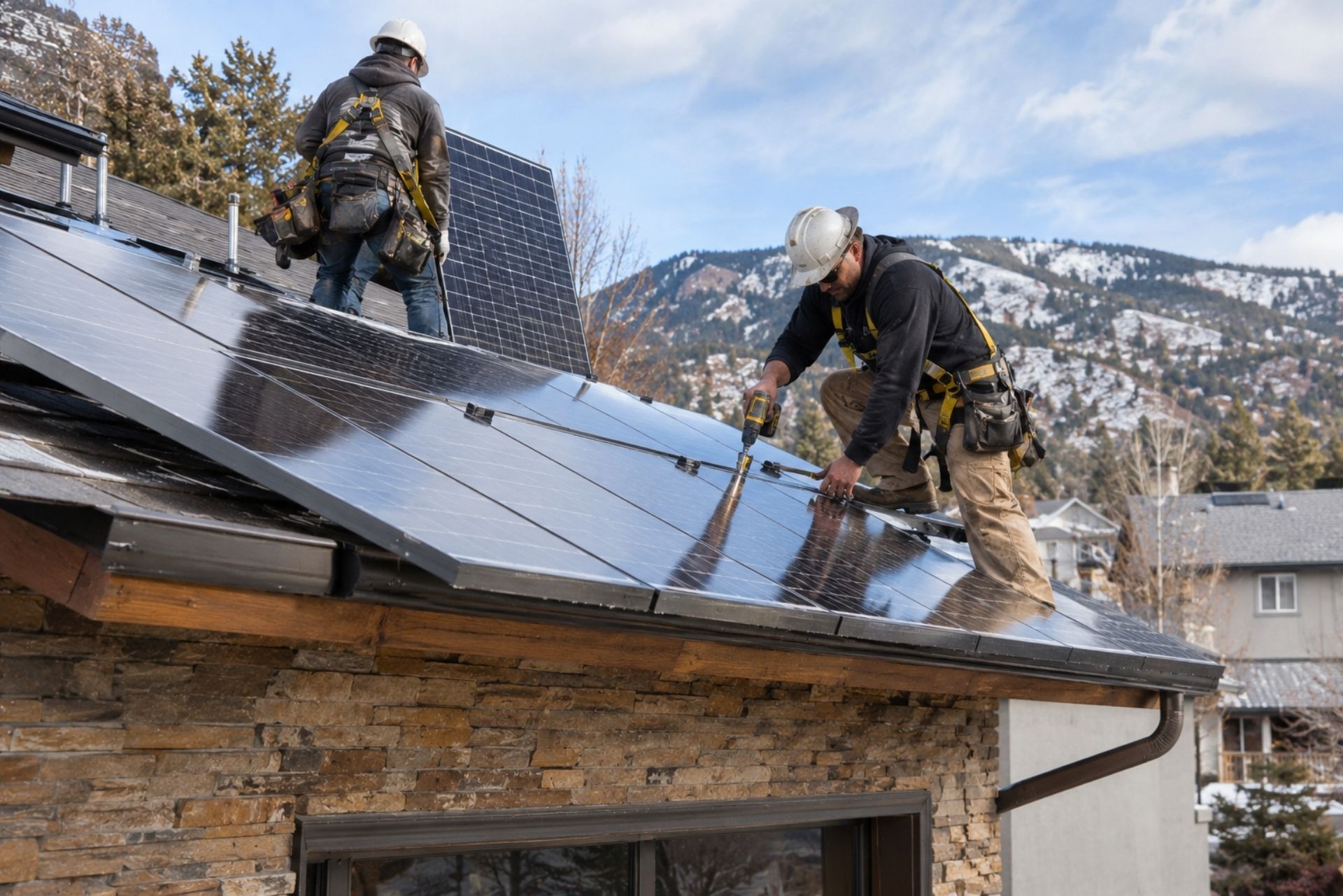
Solar is a high-hazard class for good reason. Falls from roofs are the headline risk, especially on steep pitches and frosty mornings. Electrical shock and arc flash from energized DC strings are close behind, since panels produce voltage the moment light hits them. Add in heat illness on dark shingle roofs in July, back strain from hauling panels up ladders, and lacerations from cutting rail.
Your premium is built on NCCI class codes, payroll, and your experience modification rate. Misclassification is a common and costly mistake. If your electricians are coded as general laborers, or your installers are lumped under a clerical code, the premium audit at year-end will correct it, often with a bill you weren't expecting.
Your carrier options include Pinnacol Assurance, Colorado's state-chartered workers' comp carrier, plus private carriers that write construction risks. Get quotes from Pinnacol and several private markets every year. Pricing shifts as your EMR changes, and the cheapest option three years ago may not be the cheapest now.
A note on subcontractors: if your sub doesn't carry its own workers' comp, Colorado can treat their injured workers as yours. Collect current certificates of insurance before any sub steps on a roof, and check them again at renewal time.
When an injury does happen, a solid return-to-work program lowers claim costs. Light-duty roles that work well for solar crews include:
- Equipment and tool inventory
- Safety documentation and toolbox talk prep
- Permit paperwork and utility interconnection filings
- Warehouse staging of panels and racking
Getting an injured installer back on modified duty quickly cuts temporary total disability (TTD) payments, and that protects your EMR.
Protecting Assets: Inland Marine and Tool Coverage
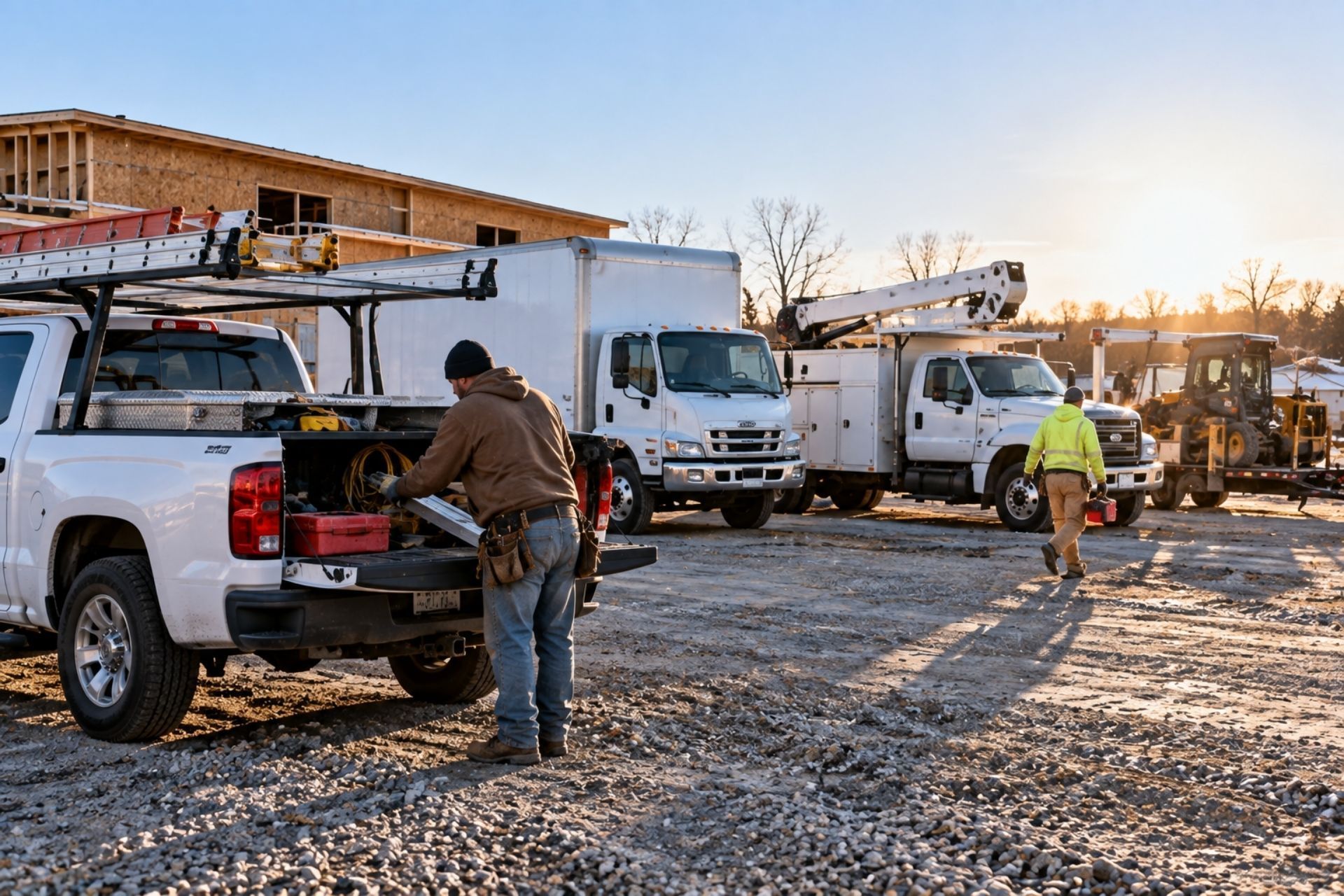
Your general liability policy won't pay when your own equipment gets stolen or damaged. Neither will your commercial auto policy, in most cases, once the tools are out of the truck. That's the job of inland marine coverage, sometimes called a contractor's equipment or tools floater.
For Colorado solar contractors, inland marine generally costs between $300 and $3,500 per year in 2026, depending on what you're insuring and how much of it. A small crew with drills, impact drivers, and a few ladders lands near the low end. A company staging pallets of panels and inverters on job sites will pay considerably more.
Theft is the claim I see most often. Panels, microinverters, and copper wire are easy to resell, and job sites in fast-growing areas like Erie or Castle Rock see regular overnight losses. Transit damage is a close second: a strap fails on I-70 and a pallet of modules ends up on the shoulder.
Before you buy, sort out three questions:
- Scheduled vs. blanket coverage: Scheduling lists each item and value. Blanket coverage handles lots of smaller tools without itemizing them, usually with a per-item cap.
- Who owns the panels on site: Before transfer of ownership, staged equipment is usually your risk. Your contract and your installation floater need to agree on that point.
- Replacement cost vs. actual cash value: ACV pays depreciated value, which may not replace a three-year-old thermal camera or drone.
That said, don't overlook the deductible. A low premium with a high deductible can mean small thefts never get paid at all.
Not every policy marketed to contractors fits a solar company. A generalist agent may quote a standard contractor package that looks fine on paper but excludes roof work or caps completed operations. A broker who places solar risks regularly will know which carriers actually want the business.
The main difference comes down to how the policy treats height, roofs, and electrical work. Standard contractor packages often assume ground-level trades, while specialized programs are written around rooftop installation, energized systems, and long warranty tails. You'll usually pay more for the specialized option. You'll also get coverage that matches what your crews do every day.
Standard vs. Specialized Solar Coverage Table
| Coverage Feature | Standard Contractor Package | Specialized Solar Program |
|---|---|---|
| Roof work | Often excluded or height-limited | Built in |
| Completed operations | May carry a reduced aggregate | Full aggregate, long tail |
| Electrical/energized work | Sometimes excluded | Covered |
| Battery storage installs | Often not addressed | Typically addressed |
| Equipment on site | Separate floater needed | Often bundled |
| Faulty workmanship damage | Narrow wording | Clearer resulting-damage language |
| Contract compliance | May miss GC requirements | Usually meets them |
The table isn't a guarantee for any individual carrier. Every policy form differs, so treat it as a checklist for questions to ask your agent. Battery storage deserves special attention, since some carriers now treat lithium storage installs as a separate exposure.
Factors Influencing Solar Insurance Costs in Colorado
There's no single price for solar contractor coverage. Your premium reflects your work mix, loss history, location, and how well you can prove you control risk. Carriers rate a residential rooftop installer in the Denver metro very differently from a ground-mount commercial contractor working on the Eastern Plains.
Key cost drivers include:
- Residential vs. commercial vs. utility-scale work
- Roof types: tile and slate jobs raise risk
- Battery storage: adds fire and electrical exposure
- Claims history and EMR
- Subcontractor use and certificate tracking
- Geography: hail exposure along the Front Range and wildfire exposure in the foothills
How Revenue and Payroll Impact Your Premiums
General liability is usually rated on revenue or payroll, while workers' comp is rated on payroll by class code. Both get audited after the policy year ends. If you estimate low at the start, the audit will catch up with you.
Here's an illustrative example of how that plays out. Say you estimate payroll for your installer class at a modest figure, then land two large commercial projects mid-year and nearly double your crew hours. Your audit will rate that extra payroll at the installer rate, and you'll owe the additional premium in a lump sum. Update your carrier mid-term when your business changes significantly, so the bill gets spread out.
EMR works the same way over time. An EMR of 1.0 is average. A few claims can push you above that for three years, raising your comp premium and potentially disqualifying you from commercial bids that require a lower EMR.
Ways to Lower Insurance Expenses Without Cutting Coverage
Cutting limits is the wrong lever. Instead, give carriers reasons to see you as a better risk:
- Document a written fall protection program with anchor inspections and harness logs.
- Photograph every roof before and after installation.
- Use manufacturer-approved flashing and keep installation records tied to each job.
- Track subcontractor certificates in a single system.
- Run a return-to-work program to keep TTD costs down.
- Shop annually through a specialist broker, comparing Pinnacol against private markets.
Mitigation also has value on the customer side. Colorado homeowners now have the right to
receive credit for verified mitigation efforts like home hardening and defensible space. Installers who understand how their work fits into a homeowner's mitigation picture can position themselves as a lower-risk partner.
Common Questions About Solar Installation Insurance
Do I need workers' comp if I only have one employee? Yes. Colorado generally requires coverage once you have employees, including part-time workers. Sole owners without employees may be able to opt out.
Will my general liability policy cover a roof leak two years after installation? Only if your policy includes completed operations coverage without a roofing exclusion. Check the endorsements and aggregate limits before you assume.
What happens during a premium audit? Your carrier reviews actual payroll, revenue, and subcontractor costs from the policy year. If they're higher than estimated, you'll owe additional premium.
Am I responsible if my subcontractor's worker gets hurt? You can be if the sub has no workers' comp. Always collect current certificates of insurance before work begins.
Does inland marine cover panels stolen from a job site? It can, if the equipment is listed or falls under a blanket limit and the policy covers job-site theft. Ask whether staged equipment is included before delivery day.
How fast should I report a claim?
Report as soon as you know about an incident. Late notice gives a carrier grounds to dispute coverage, and in workers' comp, delays can raise claim costs.
Solar installation in Colorado puts your business in the path of hail, high winds, fire risk, and long warranty tails. The right coverage plan treats each of those exposures directly instead of hoping a general contractor package will stretch to fit.
Start by pulling your current policies and reading the exclusions for roof work, height, and electrical installs. Confirm your completed operations aggregate matches your general aggregate. Check that every worker is coded correctly for workers' comp, and verify your subs' certificates are current. Then price inland marine for the tools and equipment you can't afford to replace out of pocket.
Finally, find a broker who places solar contractors regularly and ask them to quote Pinnacol alongside private carriers. Specialized coverage costs more upfront. It also means the leak claim that shows up in 2028 lands on your carrier's desk instead of your bank account.
About The Author:
John R. Thomas
As Commercial Lines Director and Managing Partner at Loft & Co Insurance Services, I specialize in crafting strategic insurance solutions for businesses—especially contractors, real estate owners, logistics firms, and industry-specific operations. With years of experience in risk management and policy design, I’m committed to delivering clarity, value, and protection that helps you focus on growth.
Contact Us
Risk Management from Real Experts With You in Charge
Professional Policies Designed For Your Business.
Enjoy tailored insurance and risk management solutions customized to your industry and business size.

Colorado Commercial Insurance Blog



Contact Us
Phone
Location
Denver
5990 Greenwood Plaza Blvd, Ste 270
Greenwood Village, CO 80111
Des Moines
130 E 3rd St. Ste 201
Des Moines, IA 50309